

Since 2016, Benin has undergone a significant economic shift, moving away from a traditional reliance on raw agricultural exports toward a high-value processing model.
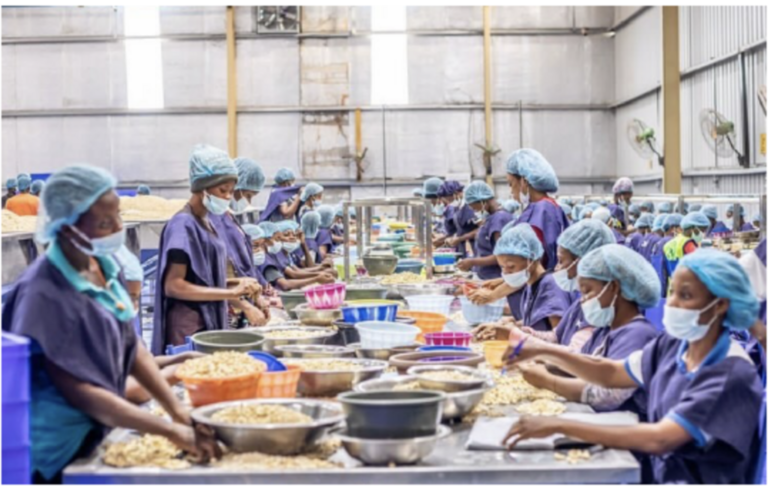
This transition is most evident in the cashew sector, where the country has announced the processing of nearly 50,000 tons of nuts for 2025—a nearly fourfold increase from the 13,000 tons processed just five years prior. This progress is the direct result of a strategic Government Action Program aimed at structuring agricultural sectors and moving up the global value chain.
Historically, Africa has faced a persistent paradox: while the continent produces more than half of the world’s cashew nuts, less than 10% is processed locally. Benin’s rapid trajectory is beginning to challenge this trend. By expanding industrial capacity, the government aims to increase the share of value-added revenue generated within its borders, thereby reducing the economy’s vulnerability to the fluctuations of global commodity prices. While Benin’s volumes currently remain smaller than those of neighboring Côte d’Ivoire, its growth rate marks it as one of the fastest-rising industrial hubs in West Africa.
Central to this industrial structuring is the Glo-Djigbé Industrial Zone (GDIZ). As the country’s primary cashew processing hub, the GDIZ provides the logistical and industrial infrastructure necessary to convert raw nuts into export-ready kernels. This platform has attracted significant foreign and domestic investment, creating industrial jobs and fostering more integrated supply chains that span from the rural farmer to the international market.
To support this industrial growth, the Beninese government has implemented rigorous market regulations. For the 2025-2026 season, the Ministries of Agriculture and Trade have established an official marketing period from February to September 2026, allowing processors to purchase directly from producers. These measures are bolstered by a landmark ban on the export of raw nuts that came into effect in 2024, a move designed to secure raw materials for local factories.
The momentum observed over the last decade is opening new opportunities for economic diversification. However, challenges remain, particularly regarding agricultural productivity and producer access to financing. As Benin consolidates these industrial gains, the cashew sector is positioned to become a sustainable driver of the national economy, combining a stable regulatory framework with successful integration into the most profitable segments of international trade.
Link:https://www.bing.com/search?q=Benin+Cashew+news&FORM=HDRSC1



